Slot Volatility Explained: Why Big Wins Feel So Rare
You just watched a streamer turn a $2 spin into $14,000 on a slot called Gates of Olympus. Ten minutes later, you open the same game, spin for forty minutes, and your balance looks like it got mugged. Nothing is broken. Nothing is rigged. You simply ran into the single most misunderstood concept in online gambling: volatility. Understand it properly and you will stop blaming bad luck for what is actually just math doing its job.
What Volatility Actually Means (Not What Streamers Tell You)
Every slot has a theoretical return to player, or RTP. A 96% RTP game, in theory, pays back 96 cents of every dollar wagered over millions of spins. That number says nothing about how those payouts arrive. Volatility is the shape of that distribution.
A low-volatility slot pays small amounts frequently. Think classic three-reel fruit machines or Book of Ra Deluxe clones. You might bet $1 and get $0.40 back, then $1.20, then $0.60. Your balance drifts slowly. Sessions feel long and steady-ish, and your bankroll can survive hundreds of spins. If you want to dig deeper, slot deposit 5000 is worth a look.
A high-volatility slot does the opposite. It can eat 300 spins without a single meaningful win, then hand you 800x your stake in one drop. Pragmatic Play's Sweet Bonanza and Nolimit City's San Quentin xWays are notorious examples. Session length is short, but the tail-end potential is enormous.
- Low volatility: frequent small wins, gentle swings, ideal for slow sessions
- Medium volatility: balanced mix, hits every 30-80 spins on average
- High volatility: long dry spells, rare but massive payouts, 1000x+ possible
- Extreme volatility: games like Money Train 3 where a 50,000x max win exists but feels impossible
The Bankroll Math Most Players Ignore
Here is where people get hurt. If you load $50 into a high-volatility slot at $1 per spin, you have 50 spins of runway. At a 96% RTP, the expected loss per spin is about 4 cents, but variance dominates that number in the short run. Fifty spins is statistically nothing. You could easily bust before the bonus round triggers, which often has a 1-in-200 or worse frequency.
A rough rule that experienced players use: your bankroll should be at least 200 to 300 times your spin size for high-volatility games, and around 100 times for low volatility. That means a $1 spin on Sweet Bonanza needs a $200-$300 cushion to give the game a fair chance to show its true nature. Play $1 spins with $30 and you are basically buying a lottery ticket with extra steps.
This is also why max-win marketing is dangerous. Slot studios love advertising a 5,000x maximum. That headline number is real, but the probability might be 1 in 5 million. You are more likely to be struck by lightning twice.
Slots vs. Table Games: Different Risk Personalities
If volatility frustrates you, the casino floor offers alternatives with utterly different profiles. Blackjack played with basic strategy has a house edge of roughly 0.5%, and variance is mild because most hands return 1:1. You will not turn $100 into $10,000, but you also will not lose it in 90 seconds.
Poker is its own beast entirely. Cash game No-Limit Hold'em has low-to-medium variance if you play tight and avoid 200-big-blind all-ins. Tournaments are the opposite: massive field, top-heavy payouts, and swings measured in buy-ins, not hands. A solid tournament player can go 20 events without a final table and still be profitable long-term. The variance lives in the schedule, not each decision.
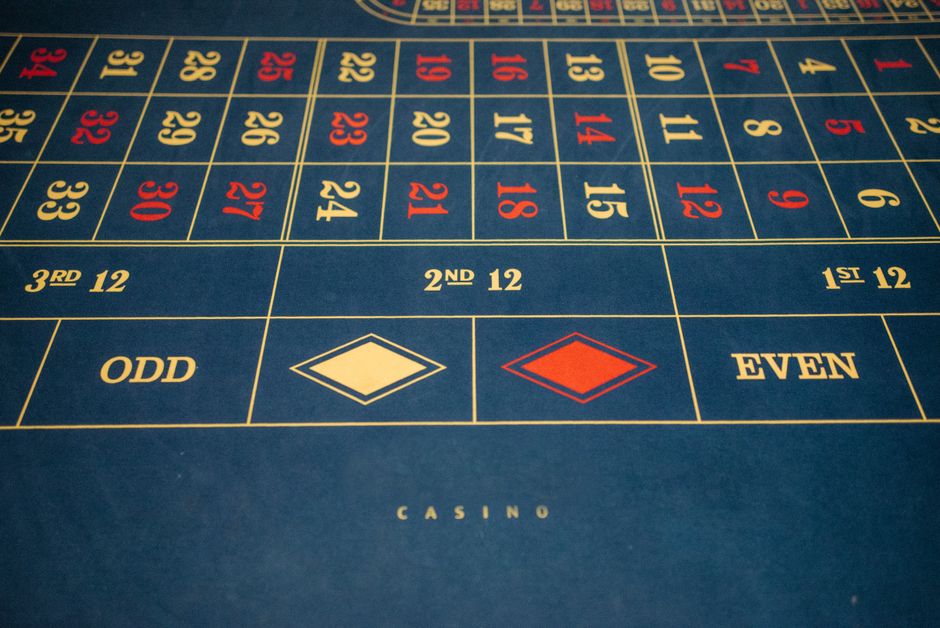
Roulette sits somewhere between. European roulette with a single zero has a 2.7% house edge and pays 35:1 on a single number. Bet red or black and you are on a near coin-flip treadmill. Bet a single number and you are essentially playing a slot with extra ceremony.
Reading Volatility Before You Spin
Good slot sites and studios have stopped hiding this information. You can usually find it in the game's info panel or paytable. Look for:
- Max win multiplier — anything above 10,000x is almost always extreme volatility.
- Hit frequency — the percentage of spins that return anything at all. Under 20% is high variance.
- Bonus buy price — if the free spins feature costs 100x your stake, the game assumes long droughts before it triggers.
- RTP range — some games let operators pick 94%, 96%, or even 92%. Lower RTP plus high volatility is a brutal combo.
On live dealer games and table titles, check the betting limits instead. Wide min-max spreads usually indicate a game designed for grinders, not thrill-seekers.
Practical Adjustments That Actually Help
You cannot beat the house edge over time, but you can absolutely manage how variance hits your wallet. A few habits separate players who last from players who reload three times a night.
- Match spin size to variance. Drop to $0.20 spins on a 50,000x max-win game so the dry spells do not devastate you.
- Set a loss limit before you log in. Not after. The number you pick when you are calm is the one that matters.
- Do not chase a single bonus round. The feature is not "due." Each spin is independent unless the game explicitly uses a progressive mechanic.
- Switch games, not stakes. If a slot is cold and you want variety, move to a different title instead of doubling bets to force a recovery.
One more thing: bonus wagering requirements interact with volatility more than people realise. A 40x playthrough on a high-volatility slot is a genuine grind because you need volume, not luck. Low-volatility games clear bonuses faster because your balance survives long enough to meet the requirement.
The Takeaway
Volatility is not a bug, a scam, or evidence that the game is out to get you. It is the personality of the machine. Some slots are accountants in a suit, paying you small and steady. Others are rockstars who vanish for months and then drop one unforgettable performance. Your job as a player is not to outsmart the math, because you cannot. Your job is to pick the personality that suits your bankroll and your nerves, and then let the numbers do their thing without torching your rent money in the process.
Pick your volatility the way you would pick a restaurant: sometimes you want a cheap, reliable lunch; sometimes you want the tasting menu that might bankrupt you. Just know which one you ordered before the bill arrives.